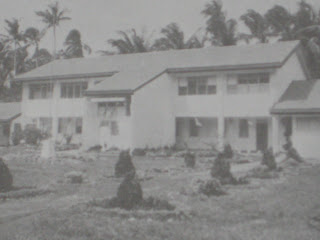
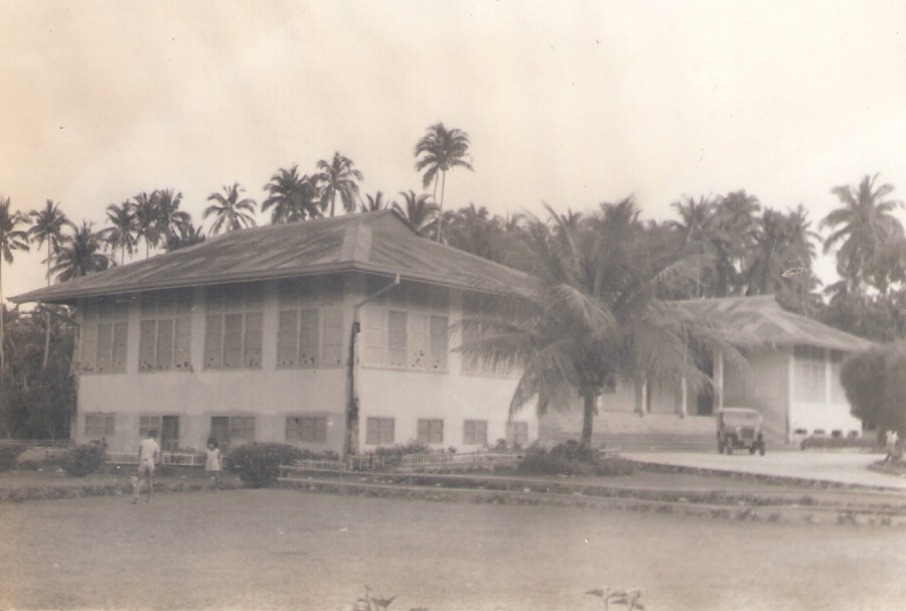
Do you know that ST. MICHAEL ARCHANGEL CHURCH was erected in 1918, in whole honor FIESTA is held May 8 every year?

Malikhaing Panulat ng isa nating kababayang si RUDY S. ASTRONOMO na nagmula sa Brgy Pook Rizal, Laguna.

Do you know that ST. MICHAEL ARCHANGEL CHURCH was erected in 1918, in whole honor FIESTA is held May 8 every year?


Even before the Spaniards and American came to the
When the country was faced with threats on security or peace and order, the people continued to use the Kalatong especially in remote areas where all houses had one that can only be used when there was danger or a call for meetings.


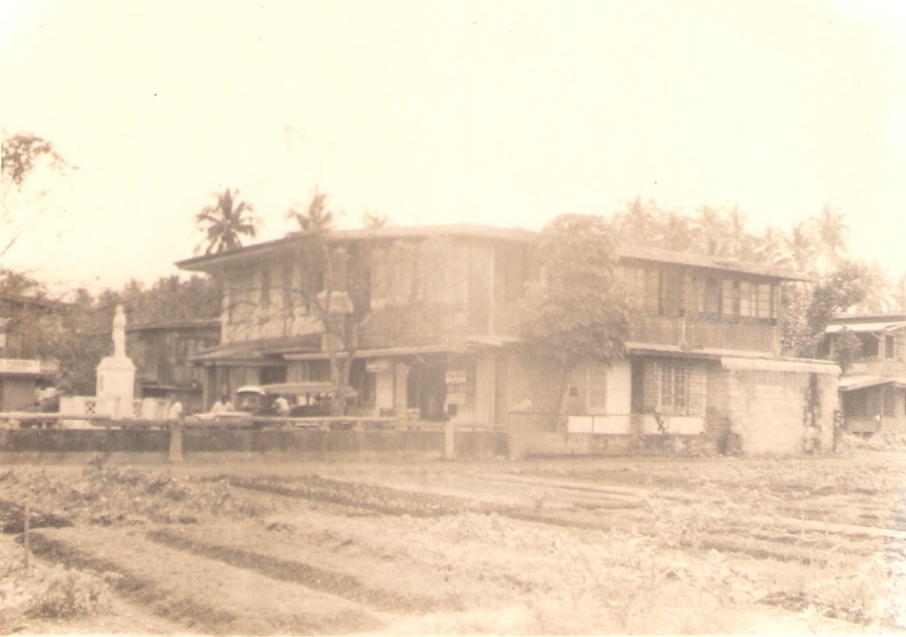
Officers and members of Rizal Women’s Club 1948. Photo taken at the Estanislao A. Fernandez Plaza, background is the old Rizal Municipal building and Puericulture Center.
Filed under: Old Pic's | No Comments »
The process begins with the coconut tree -- "the tree of life." As with most fruit-bearing trees, flowers turn into the fruit. Lambanog making trees never produce fruit, because it is the sap from the coconut flower that is the crucial ingredient for this unique coconut wine. Plantation workers called mangagarit climb the coconut trees every afternoon to prune the flowers so that their sap drips into bamboo receptacles called tukil. (This process is analogous to rubber tree tapping.) The next morning, the mangagarit returns to collect the sap from these receptacles. The sap is then put through a cooking or fermentation process, which produces a popular coconut toddy called tuba. The tuba is then taken and distilled to produce lambanog. Until recently, lambanog was primarily an local drink, much like home-made apple cider or backwoods moonshine. Lambanog is widely enjoyed by the locals of the Quezon province, and festive occasions are incomplete without the traditional "tagayan" or wine-drinking. While the "tagayan" can take on different forms, the most common kind involves taking turns drinking out of a single glass set in the middle of the group.


By Mr. Isagani Visey & Mr. Valentine Urrea
Formerly, the small town of
In 1912, after the liberation, Barrio Pauli obtained her municipal status with Pedro Urrea, Sr. as its Municipal President. She then became a
Because of the vehement desire of the people to maintain its municipal status, the residents led by Fortunato U. Arban and Agustin U. Vista then councilors of Nagcarlan, Laguna petitioned the Office of the Governor-General of the Philippine Islands praying that the former
On December 19, 1918, Acting Governor-General Charles E. Yeather issued an Executive Order No. 58 increasing the twenty seven municipalities of the Province of Laguna to twenty-eight by separating the former municipality of Rizal from the municipality of Nagcarlan and reorganizing the same into an independent municipality comprising eight barrios such as Antipolo, Entablado, Maiton, Laguan, Pauli, Talaga, Tuy and Pook that took effect in January 1, 1919.
After such creation, Fortunato U. Arban and Agustin Vista were appointed Municipal President and Municipal Vice President respectively, until they got elected in the same positions during the first local elections in 1919.

BARANGAY ANTIPOLO
Antipolo is one of the largest barrios in the town of Rizal, Province of Laguna. It is located in the Western part of the town, a kilometer away from the Poblacion. This barrio is along the provincial road leading to San Pablo City. It serves as a boundary line of Rizal and San Pablo City.
Apprehension of information reveals that this barrio was established when our town, formerly known as Pauli, was separated from her mother town, the town of Nagcarlan, Laguna. Antipolo is the ancient name of this place because of the huge Antipolo tree in that place, that guided and gave shed to travelers who were resting under it before going down the muddy road of Biuyan.
This barrio which had been derived from the symbolic Antipolo tree was inhabited by few families. The original families who were they bases of improvements were Pedro Urrea’s Family, Manuel Author’s family, Eleuterio Laycano’s family, Eladio Sumatra’s family and the Silvestre Laycano’s family. This group of families worked together, lived together peacefully under the leadership of their barrio lieutenants from the very beginning up to the present date, Those who guided and led them in their activities were Senon Urrea, Silvestre Laycano, Eladio Sumatra, Jose Urrea, Reymondo Isleta, Ladislao Formales, Leon Autor, Igmedio Royo, Pedro Sumatra and Teofilo Isleta.
This barrio of Antipolo is a congregation of different sitios. The different sitios that composed the barrio are: Punong-halang, Sabutan, Tabla, Pauli and Kalibato. These sitios under the jurisdiction of Antipolo were named by the early inhabitants depending upon the events that happen on that place and upon the products raised. The sitio of Pulong-halang was so named because it was the hiding place of the “Manghaharang” after robbing the travelers on the difficult road at Biuyan, Sabutan is another sitio of Antipolo, it has been named after the Sabutan plant raised on that place and according to some old people it was also called that name for it was the place where robbers met to trade their kidnapped persons or things for the expediency of their barbarous business.
It was the so-called “Sabutan” ng mga hinarang ng mga nanghaharang.
This sitio was once made a camp of the guerilla units during the Japanese occupation. Pauli is another sitio of the barrio Antipolo got its name from the stream that flows back and forth of “Pauli-uli”. Tabla a sitio of the same barrio is a historical spot. It had been the guarding place or outpost of General Juan Cailles faithful soldier during the Filipino-American War. It had been named Tabla, because of the lumber or “table” produced from that place when it was still a wilderness. The most important sitio of Antipolo is what we called Kalibato, for it had been the source of living of the inhabitants of the nearby barrios. There is a legend about it that runs. Long time ago, this place was a farm of a couple named Kali and Berta. This couple were living happily, contented of their lives for they have sufficient food to support their living. One day an old woman came, begging for food. When Kali saw the rugged woman he drove her away with the help of his dog. To protect herself from being bitten by the dogs she threw stones to them and said, “May God punish you for your selfishness”. Berta said “Kali, bato”, Kali placed up the stone thrown by the old woman. When Kali was holding the stone to be thrown back to the old woman a roaring sound was heard. And after the strange sound, the place where Kali was standing sank and became a lake. When the neighbors asked Berta what happen she said, “I just shouted Kali, Bato, then the place where Kali was standing sank after the roaring sound. Thus, Kalibato got its name.
This barrio is very fortunate for it had been free from destruction of lives and properties during the past wars.
The past, present and popular name of the barrio Pauli. It was name after the stream that passes through the barrio going to the northern sitio called alibung-bungan and goes westward then eastward four time near the lot of Mr. Cristeto Lucido before it goes to Kalibato Lake.
When Pauli was first separated from the town of Nagcarlan, the President or Kapitan was Mariano Isles. The policeman were called commisario. Mariano Isles served for two years. There were very few people yet living and the town could stand alone so the town was given up again to Nagcarlan. Then Pedro Urrea made efforts to make again the barrio a town, it was again separated from Nagcarlan, One of the accomplishments by him was the improvement of the road. Formerly the road infront of the house of the late Rizalino Urriquia up to the house of the late Hiladia Perez Urrea it was straightened after a lapse of two years the inhabitants of the town could not support the municipality, so it was again returned to the town of Nagcarlan. From 1915-1918 on of the three councilor of the town of Nagcarlan felt that it was very unfair for the barrio of Pauli that even the school had not improved and the President gave only two teachers, when there were excess of children for each teacher. So Mr. Agustin Vista and Mr. Fortunato Arban organized a secret plan of organizing a new town of Pauli, it was in the year 1919 that the barrio was separated from Nagcarlan for the third time. When it was already a town it was divided into different “puroks” and the former Pauli became the Poblacion. About ¼ of the whole Pauli remained the present Pauli and in northern Pauli became the sitio called “Alibung-bungan”.
Alibung-bungan is the only sitio of Pauli which lies in the northern part of the Poblacion. The original families who lived in this sitio were Ricardo Isleta, Pedro Urtola, Vicente Perez, wife of Romualdo Oro, Justo Perez, Hiladia Perez who are brothers and sisters, Luduvico Urtola, Mariano Formales, Paula Formales, Melecia Formales and Francisco Carpena.
In the sitio of Alibung-bungan original families were Antonino Montermoso and Lucena Sumague, Juan Austral and Marina Isleta, Juan Urriza, Placida Isleta, Dorotea Ciar and Elvira Sumiran.
Before Pauli was separated from Nagcarlan, which was during the time of the Spaniards, Filipino were given punishment for mere accusations. Ciriaco Isleta and Juan Imbo were captured and killed by the Spaniards. Houses were burned because they taught they were the hiding places of “insurectos”. The Spaniards did not stay long later the Americans came to help the Filipinos, they were very friendly to the people, they gave ration to the poor people. The insurectos were forced to surrender. They paid the guns own by the insurectos.
The following barrio lieutenants were the leaders from the very beginning Spanish regime to the present. The very first appointed barrio lieutenant was Mariano Urtola, second was Lazaro Sumague, third was Romualdo Oro, fourth was Honorio Mesinas, fifth was Rufino Isleta, then Eulogio Urtula who served until the coming of the American. Succeeding him was Wenceslao Isleta as the seventh. Eight was Jose Vistan, and then Bernardino Oro, the tenth was Dominador Bortonel, residing in the sitio of Alibung-bungan. Mr. David Formales was the eleventh, who served during the Japanese time. Then Dominador Bortonel as the 13th and 14th respectively. At the returned of the Americans it was Mr. Florentino Suñiga who was appointed and serving up to the present time.
Even during the Spanish regime this place was never captured nor trespassed by the “Tulisan” or law breaker. There were no uprisings or rebellion against the people and the foreigners who were trying to own us. Disaster done by the Japanese was the burning of houses. All houses in Pauli were burned. Later, the Americans liberated the Philippines and all owners of burned houses were given claim paper to be filled up and sent to the War Damage Commission Office. When this claim were approved by the Rehabilitation Committee Office. Home owners received payments for the destruction. Aside from the money given by the War Damage Commission the members of the Protestant Religion
of Pauli gave voluntary contributions for the construction of the destroyed chapel.
In an encounter in Sta Cruz in 1942, Bienvenido Sumatra, a native of Pauli, a guerilla was killed by the Japanese. Unfortunately on the 26th of July 1944, another native of Pauli, Eugenia Sombilla wife of Mr. Jeremias dela Cruz was also shot to death by the Japanese stragglers who were trying to cross the street of Pauli going northward from the backyard of their house. There was a blackout at that time. The guerillas ran after the Japanese soldier, but the later were able to escape. From that time on the people of Pauli had been always alert. Due to the untiring effort of counselor Jose Oro, the people of Pauli are peaceful and continuing to their best for the betterment of community living.
One of the sections of the town of Rizal, Laguna which is the town proper is known as Poblacion.
Formerly, when it was still the prosperous barrio of Nagcarlan, it was known as Pauli because of its river that flows westward and returns eastward. In other words the river goes back and forth which means “Pauli-uli”, in Tagalog. This words was shortened into “Pauli” which was the town given to the barrio.
In the year 1915 up to the later part of 1918, the councilor of that barrio, Mr. Fortunato Arban had been working a secret plan organizing the new town of Pauli. Eight other barrios planned to separate from the municipality of Nagcarlan to be combined with Pauli to form a new town. These barrios were North Pauli, Tuy, Laguan, Entablado, Tala, Talaga and Antipolo.
Not long afterwards, Don Juan Cailles, the Provincial Governor at that time, came to know of the plan. He lost no time in summoning Mr. Fortunato Arban to the Provincial Capitol to talk over the matter. He readily acceded with Mr. Arban and the proposal of the creation of the new town was brought to Manila and prevented to the Philippine Congress. It was indorsed to Governor Francis Burton Harrison who approved it with Mr. Fortunato Arban as the President and Mr. Agustin Vista the Vice President. The appointed councilors were Messrs. Juan Isles, Inocente Sumague, Gregorio Isles, Ceriaco Zuasola, Felix Isles, Claro Munda, Pedro Urrea and Wenceslao Isles.
In 1919, the first local election was held, Mr. Fortunato Arban was elected President and Mr. Agustin Vista the Vice President. The elected councilors were Messrs. Luis Reolada, Pedro Urrea, Norberto Vista, Juan Isles, Inocente Sumague and Felix Isleta.
At that time there was no layout of streets so that the President made it a point to construct streets. He asked the help and cooperation of the people who in turn offered their services free. A public market was built at the expense of the municipality.
Still having in mind the education of the masses as a step towards progress, a primary school was established. The house of Mrs. Potenciana Solis de Arguel was rented to accommodate the school children. Later the Vice-President’s home was also used as the enrollment increased. Then the municipal government sought for a school site wherein to build the Primary Building. In 1920 a site for the Home Economics Building was purchased from the couple Ignacio Isles and Natalia Rubiato. The first intermediate class was opened the same year.
The next election held in 1922. The following officials were elected: Mr. Agustin Vista – President, Mr. Pedro Isleta – Vice President and the councilors were Messrs. Fortunato Arban, Pedro Urrea, Narciso Asegurado, Pedro Sombilla, Leoncio Sombilla, Wenceslao Isles, Claro Munda and Juan Lucido. During this period, the construction of the Primary School Building which was begun in previous administration was completed. A Home Economics Building was also constructed. Another accomplishment was the installation of the waterworks system but this was not finished. The tenure of office end in 1925.
Another President was elected in the person of Mr. Cornelio Viriña in 1925. The Vice-President was Mr. Juan Lucido and under their term, the water works project was completed.
At the expiration of Mr. Viriña’s term, Mr. Fortunato Arban was again elected in 1928 as president. Once more he proved himself to be an advocate of uplifting his people through educating them so there had been a rapid increase in the school enrollment. Another school building was needed so that he made personal appeals to the people to pay taxes in order to have new building erected. His appeal was too much for the people to discard so they had to cooperate with him. Thus, another building was built. It was the present intermediate building.
After his term Mr. Clemente Sombilla took over in the next election in 1931. Not much could be mentioned here. He was succeeded again by Mr. Fortunato Arban in 1934 up to 1937.
With the change in the form of government to a Commonwealth in 1937, Mr. Agustin Vista was once more elected President. His object this time was the improvement of the roads. He succeeded in securing the Provincial Officials help in having the Provincial Road running through the town asphalted.
An excitement was to be witnessed in the 1941 election. It was during this time when the world war was in critical situation due to a threatening war. The candidate running for presidency during this period was a Sakdalista in the person of Mr. Godofredo Asegurado and a Nationalista in a person of Mr. Pablo Urrea.
Mr. Pablo Urrea came out the victor with Mr. Ismael Sombilla as the Vice President. A few months later, World War II broke out. The Japanese came and took command over us. Inspite of the constant grilling by the Nippons, Mr. Urrea stood past in his post bravely tackling the dangerous task of shielding the underground resistance movement in its action which was raging in town. After two years he shifted his responsibilities to the Vice Mayor Mr. Ismael Sombilla.
Mr. Ismael Sombilla was another man who deceived and fooled, the Japanese for the same cause. He helps support the guerillas by giving them food, clothing and information.
About the middle part of the occupation period, the responsibility was transferred to a councilor then Mr. Dionisio Limcuando. The condition during this time was so critical that the inhabitants of Poblacion had vacated their places. Most of them went to the mountain. A truckful of Japanese soldiers was ambushed in the barrio Pook so that in their return trip the town was burned, leaving most of the Poblacion folks homeless. This happened on January 23, 1945. Some houses together with the school buildings, the church and the municipal building were the only ones luckily spared.
Then the town was soon liberated and from the ruins of the houses sprang the so-called “barong-barong”. Former activities were resumed. Schools were opened and the governmental machinery began to function again. The former officials resumed their offices. During this short period, the front part of the
Municipal Bulding was paved on a plaza was constructed and named after the beloved Congressman of the second district of Laguna, Honorable Estanislao A. Fernandez, Jr.
The first local election after the liberation was held on April 23, 1946. There was no rivalry witnessed in this election for the mayor was unanimously elected to office due to his winsome and magnetic personality and bravery which won for him the full support and admiration of the people.
He was inexperienced in the politics but he showed great abilities in tackling the major problems of his administration. He has accomplished so many things as the reconstruction of the old wooden municipality to a semi-concrete building and the replenishing of the plaza which is now worthy pride of the community. But more than all of these is his fearless to right and wrong, his devotion to duty to the sacrifice of his family and his honesty which instill in the people complete thrust that no harm can come to them as long as he is with them.
Another public building that is to be found in Poblacion is the Roman Catholic Church which was set up with the coming of Spaniards. It was at first a make shift with cogon roofing, sawali and bamboo walls and filed floor
Pook is a small barrios of Rizal. There are more or less 300 people residing in it. It is situated on a high level land and is separated from the town of Nagcarlan by a running stream known as Pook stream. It is about three (3) kilometers from Nagcarlan and less than two (2) kilometers from Poblacion. The people have tried to beautify their surroundings by planting flowering plants infront of their houses. Even if this is a barrio it is installed with electric light and water supply. The people here depend on farming in the nearby places like the Abakahan, San Miguel, Luya, Mahaguil-haguil, Mayton and Lusakan. They raise coconuts, fruits and vegetables.
Pook according to the old folks got its name wayback during the Spanish regime. During that time Rizal was not yet a town, but a barrio of Nagcarlan known as Pauli. Before going to Pauli, people would stop in Pook. This caused the people to settle here. They built their huts in groups or “pook-pook” which they called Pook meaning small nipa houses in groups.
According to the old men in the barrio, the original families that formed the barrio of Pook were as follows: the Sombilla, Conservado and the Vista’s family. So as far as remembered there are many tenientes del barrios who served as head of the barrio during the Spanish period. They were Batoy Sombilla, Joseph Vista and Juan Conservado. It was during that time, there was that we called “escrebiente del barrio” o secretary of the barrio and Hildo Urrete filled up this post. When the American came here the following persons who ruled this place were Antonio Articona, Luciano Asegurado, Moises Sombilla, Macario Asegurado, Fausto Visey, Lupe Lucido, the present teniente del barrio Mr. Sigundo Pisano.
According to reliable source, Pook was formed earlier than Pauli how Rizal town and it had its own chapel. There was a quarrel between the people of Pauli and Pook, the main cause of the trouble was that the people of Pauli created the Pook Chapel to be transformed to Pauli.
But the people of Pook didn’t like this. So the people of Pauli got the church belonging like that of the tiles, roof and the patron saint San Miguel. Pook celebrated with “comidya” there will be a fair weather. If there is a drama or none at all, there is a possibility that there will be a storm so the people will not celebrate its fiesta happily.
Pook’s candidates for office of municipal councilors were successfully elected. They served as a barrios voice in the municipal council. They were Juan Vitangcol, Macario Visey and Pedro Suministrado.
During the Spanish regime there were many young men who joined the guerilla unit who fought against the Japanese through the leadership of Col. Eriberto Sombilla of that place. One time when the Japanese where repairing the bridge the guerilla ambushed them. This angered the Japanese and caused them to burned the houses in the town of Rizal and the neighbor barrios and few building escaped from the destruction.
At present, one can noticed the great improvement of the barrio. Houses were constructed and beautified by flower plants.
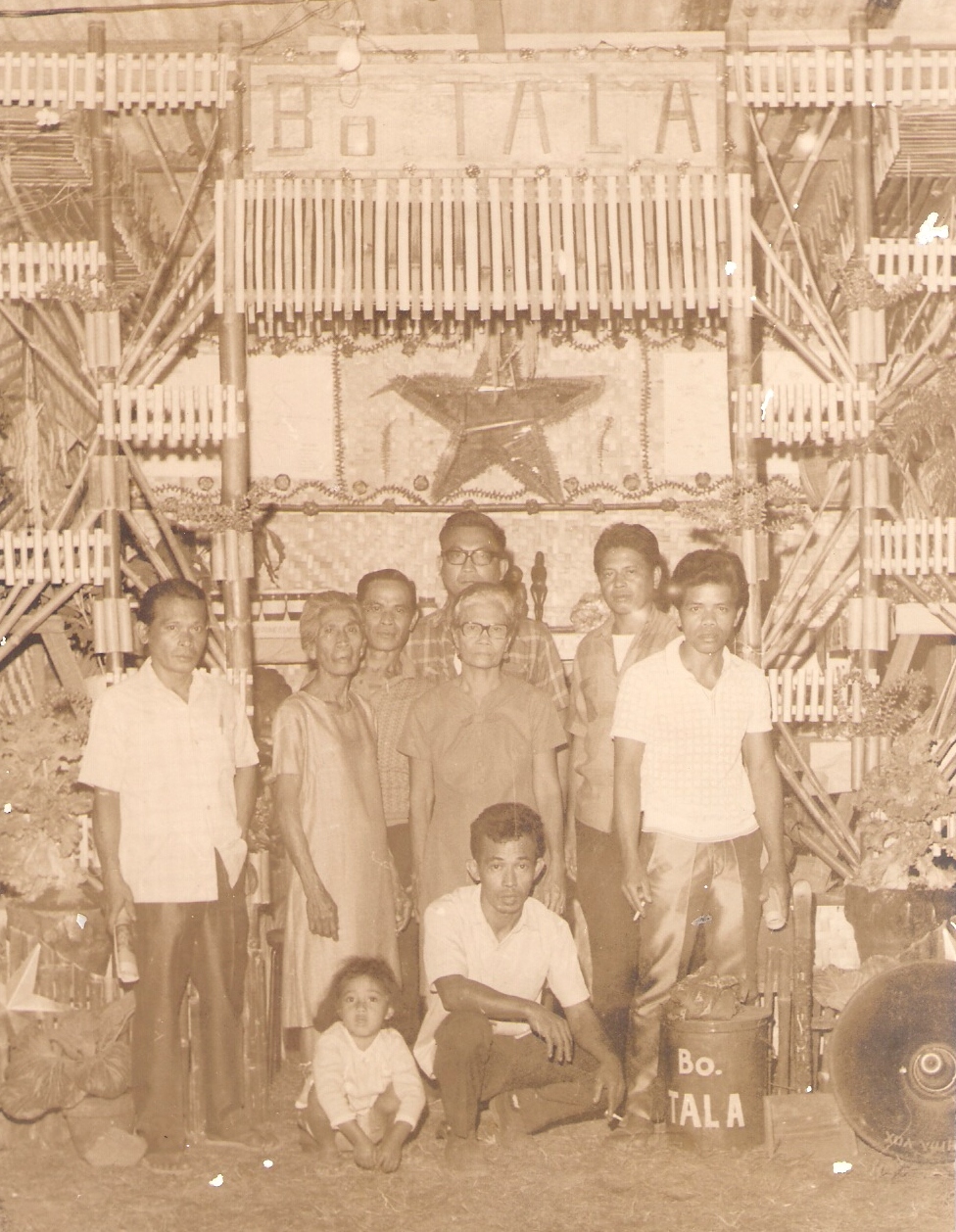
To the present history of “Tala” a certain barrio of the Municipality of Rizal in the Province of Laguna, we have to delve a little bit deeper to trace out the salient features that contributed most to the development of this barrio. In order to meet this objective we should therefore deal briefly with the general history of the town of Rizal in particular.
According to historical records pertaining to the town of Rizal, the said municipality was formerly a barrio of Nagcarlan, Laguna called Pauli, the barrio became the Municipality of Rizal, when Tala became more popularly known to the neighborhood.
Unlike other barrio, Tala has her name unchanged. Its name is known to have been derived from a certain sweet smelling medical plant called “Tala” growing abundantly in the locality. The natives use the juice of the leaves of this plant by mixing it with “gogo” for washing the hair.
There are several sitios within the barrio of Tala. They are Ibayiw, La-lao, Dagatan, Tabla, Mahaguil-haguil and Bunsuran. Although there were no official records preserved, it was popularly believed that the barrio was established during the Spanish regime. According to the old folks the early setters of the barrio of Tala were the following couples: Modesto Isles and Maria Sumague, Crispulo Sumague and Simeona Sumatra, Liberato Sumague and Juanita Conservado. Their respective great grand-children are still living in the barrio and they are the sources of several important information about the barrio.
When the place increased in population the people felt a need for a leader among them. As a result of this development among themselves gradually a succession of barrio lieutenant or teniente del barrio developed. Successively the following men served for the purpose and acted as tenientes. They were: Ciriaco Lucido, Damaso Zuasola, Felix Suaze, Filomeno Isles, Felipe Urriquia, Teodoro Zuasola, Lorenzo Lucido, Moises Prillo, Pedro Sumague and Alfredo Consul, the present barrio lieutenant.
Prior to the Philippine revolution of 1806, there were many people living in the sitios of Ibayiw, Dagatan and La-lao. These sitios were evacuated by the natives because the guardia civil drove them as they often became fields of encounter between the Spaniards and the rebel army. Most of the natives then concentrated in the barrio of Tala. The Sitio of Dagatan got its name from a body of water that looks like a small lake called in Tagalog “Dagat-dagatan”. Whereas, La-lao was attributed to the presence of quicksand called “kumonoy”. Ibayiw’s name is due to its location being situated in a place on the other bank of Mayton Creek. While Tabla, the sitio that was more significant that the others is a battle-term name which means “tie”. Often during the Spanish time this place became battlegrounds not only between Spaniards and Filipino revolutionary army, the Americans and General Emilio Aguinaldo’s fighting men but also among Filipino outlaws. The attributing incident that took place within the vicinity that produced the name “Tabla” was accounted to the warfare between a contrabando tobacco seller called “estranio” and the guardia civil which resulted in neither victory nor defeat for both the conflicting parties.
Aside from having historical sitios such as the sitio of Tabla and Ibayiw where several warfare had happened, Tala as a whole can boast of the many historical significant events which took place there. During the Spanish regime many fields fighting took place there.
During the early part of the American occupation, few encounters had taken place between the new colonizers and the revolutionists. However, this barrio became a major stronghold that openly repulsed the famous advancing American cavalry coming from the town of San Pablo.
Shortly after the conflict with the Americans, a new way of life, a new ideology was introduced to the Filipinos by the new comers. The Filipinos easily adhered to the new principle promulgated by the new conquerors from the west. The Filipinos as a whole realized that this doctrine of democracy is better, a blessing rather than tyranny and oppression and felt for the first time that they were to live under a government of the people, by the people and for the people.
For all of this God-given chances, the Filipinos easily learned to recognize the value of peace and order of the country. No more uprising happened anywhere, anytime even in the blood-soaked ground of the barrio of Tala where once murder, robbery and warfare were just ordinary incidents. Peace and tranquility ruled over the residents of Tala for almost four decade it would have been possible that additional extend of development could have been accomplished in the barrio of Tala were it not for the outbreak of the second global war heralded by the treacherous bombing of Pearl Harbor on December 8, 1941 by the Japanese Imperial Forces.
Residents of the barrio of Tala as well as every Filipino once more suffered the agony and tremor of war.
By this global was which ended in the defeat of Japan has put to a severe test the Filipino traditional loyalty to their country and United States of America. As early as the announcement of the Japanese victory in Bataan in April 1942, many patriotics Filipinos in the archipelago started in the resistant movement. Heading the call to resist the reign of terror, tyranny and oppressions that was being shown in the very eyes of the liberty-loving Filipino people, citizens of the municipalities of Nagcarlan, Rizal, Lilio, Pila and Majayjay, Province of Laguna organized guerilla units and pledge themselves to fight the enemy morally and physically. From anti-Japanese propaganda, the fight for freedom culminated into bloody battles which paved the way for the liberation of the areas were they operated.
The barrio of Tala as well as her natives played a very important rule in this straggle for liberty. During the early stage of the underground movement, the home of Mr. & Mrs Isidro Urriquia, a then Captain of the Fil-American irregular troops, guerilla units who assumed the nom de guerre, “Captain Tala” was the secret headquarters of the guerillas were conferences of vital importance among guerilla leaders were discussed and planned. The same house also served as emergency hospital for the sick and wounded members of the organization period. Col. Eriberto Sombilla, alias Col. Talahib secured protection and nourishment in this house. When he was fatally wounded during an encounter with the Japanese sometimes in the early part of 1944.
By the end of the year 1944, the sitio’s of Ibayiw, Tabla, La-lao in the barrio of Tala, Rizal, Laguna become practically a complete guerilla territory. All Attempts by the Japanese to penetrate into the area and harass the guerillas had ended disastrously for them. The whole territory of Tala and the nearby hills and mountain extending from the western outskirts of San Pablo City through town of Rizal, Nagcarlan, Lilio up to Majayjay came under the armed and administrative control of the guerillas under Col. Alfredo M. David. All the hilly areas of Tala
was the guerillas under Col. David’s military control in the more populated sector, different sanctions were mark as guerilla headquarters, as offices and quarters. Movements within those areas were restricted. Individual permits were necessary as a precautionary measure and outposts were set up at strategic places and trails. It was in this guerilla camp in the barrio of Tala in the thick forest of Sitio Lalao were Majors Howe and Tom and the wife and children of Brigadier General Carlos P. Romulo lived for sometimes with a feeling of security until all of them were pick-up by the place in the adjoining improvised landing field. For everything that the barrio of Tala is concerned during the second World War this are only her principal accomplishment so far.
At the end of this war, the people of Tala once more witnessed a blessing of United States Government by recognizing the members of the guerilla units and gave them the due compensation in accordance with their respective services. It was a boom for the barrio of Tala for great majority of people received financial aid.
Captain Isidro Urriquia who was also recognized in his rank won in the election for mayorship in 1946 without opposition. During his four years term he once more proved to the people that he was not merely a military leader in the town but also a dynamic political figure whose services has made the municipality of Rizal a model in the province. Inspite of the existence of the dissidents, never has the town of Rizal been molested by the Huks. These are
the signs that Mayor Isidro I. Urriquia and his tested fighting men which the majority are from the barrio Tala will always fry to keep their hard earned honor be worthy of the respect of the people.
During his incumbency as a Mayor, he was able to carry out several improvements. The municipal town hall and other public buildings were reconstructed. Coconut industry being the principal means of income of the town is being afforded at first class security. By overwhelming demand, Mayor Isidro I. Urriquia was re-elected in November 1951 to serve for another four years.
The barrio of Tala is proud to have a son not only known by his own people but instead known to the whole province of Laguna for his services. As a mayor who can rarely be equal by his contemporaries in the entire province.
Unlike in 1890-1900, not so many lives disappeared in the war of 1941-1945. The fact could be attributed maybe to the unity of the people when they had not get tested the glory of life under the sunlight of democracy.
Batang Rizal is the community based website/blog of all Rizalians not only in the Philippines and abroad but in the whole wide universe. It contains information, news, features, links, updates and everything about the municipality of Rizal, in the Province of Laguna Philippines. Visit http:// batangrizal.wordpress.com and or http://batangrizal.blogspot.com learn more and be updated of what’s happening in the place we call HOME
This web is a project of Councilor Ferdinand O. Sumague a.k.a. FERDIE, wherein it has an original concept and design to promote the municipality of Rizal as an Agri-Eco-Tourism destination and the town’s historical heritage, to serve as the portal site of Rizalians on the web and to enable the presence of Rizalians in the world wide web.